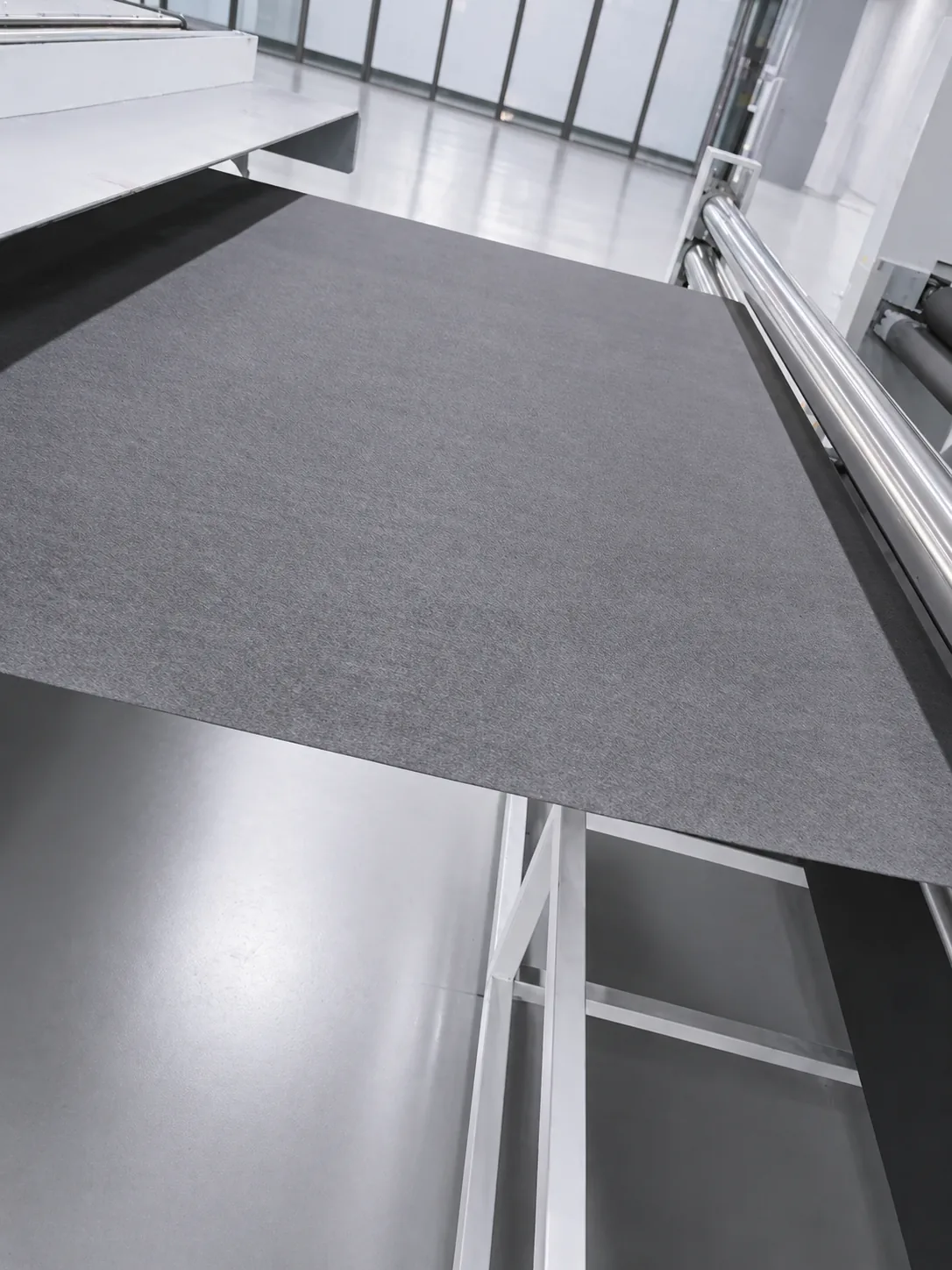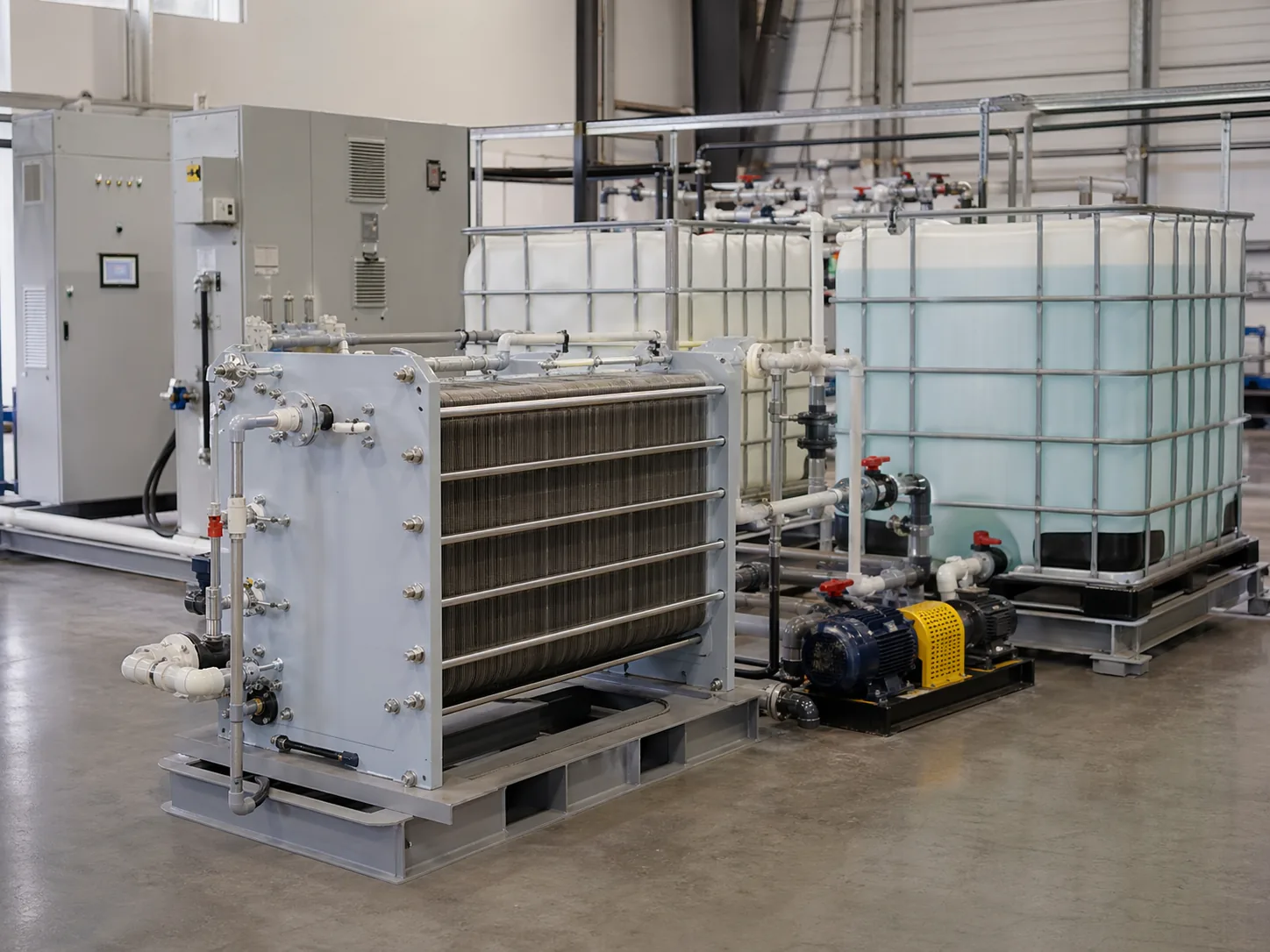
Flow batteries store energy in liquid electrolyte held in external tanks, with porous carbon electrodes serving as the catalytic interface. The architecture supports 4 to 12 hour discharge durations, long cycle life, and inherent non-flammability, making flow batteries a key route for grid-scale long-duration storage.
The AYD Flow Series covers electrode materials for flow batteries. Built on a PAN precursor and processed on a continuous integrated line, five standard grades span 0.7 mm woven cloth to 7.0 mm felt for vanadium, zinc-bromine, all-iron, and iron-chromium chemistries, from R&D samples to volume orders.
The flow battery chemistries Flow Series serves.
From 0.7 mm woven carbon cloth to 7.0 mm thick felt, five standard grades cover vanadium, zinc-bromine, all-iron, and iron-chromium flow battery chemistries. The matrix below shows how each grade maps to typical applications across these chemistries.
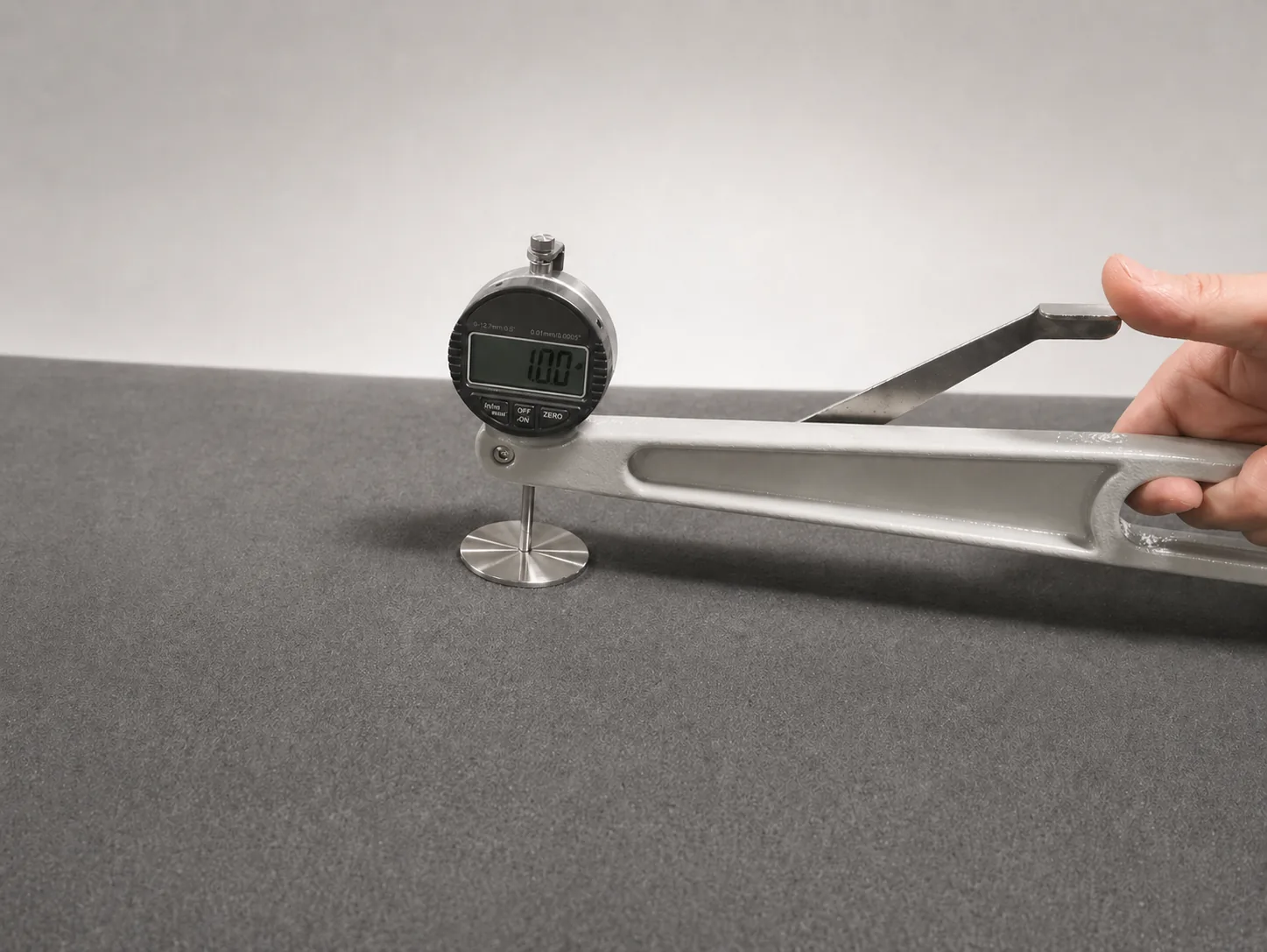
PAN-based continuous integrated line with process control from precursor screening through activation and finishing. ASR is measured at 0.1 MPa, a representative stack compression condition. Roll width exceeds 1200 mm, supporting single-cell active areas above 0.5 m².
Vanadium VRFB
The active species on both electrodes are vanadium ions, V²⁺/V³⁺ on the negative side and VO²⁺/VO₂⁺ on the positive side, dissolved in sulfuric acid electrolyte. Both half-cells require carbon felt as the catalytic surface for the redox reaction. Because the active species is a single element, the electrolyte can often be reconditioned and reused.
Vanadium redox kinetics are highly sensitive to electrode surface chemistry. The felt must be sufficiently activated to introduce enough oxygen-containing functional groups; otherwise reaction rates drop, energy efficiency falls, and peak power density is limited. Large-format stacks also require uniform resistance distribution across active areas exceeding 0.5m² to avoid localized overpotential and thermal hot-spots.
Electrode felt is the core reaction interface of a vanadium battery. Flow-25 (2.5mm) is a widely adopted reference grade for commercial VRFB stacks. Flow-45 (4.35mm) suits 4 to 8 hour long-duration systems and reduces pumping losses. Flow-70 (7.0mm) suits ultra-long-duration stacks above 8 hours with low hydraulic resistance.
Zinc-Bromine and All-Iron Chemistries
Zinc-bromine systems (including zinc-hybrid architectures) use Zn/Zn²⁺ and Br₂/Br⁻ couples. Carbon felt sits on the positive electrode while the negative is typically a non-carbon substrate. All-iron systems use iron on both sides with carbon felt at both electrodes, but the activation requirements are less demanding than VRFB. Both chemistries have substantially lower electrolyte raw-material costs than vanadium, which is one of the drivers of growth in grid-scale storage projects.
The zinc-bromine positive electrode generally does not require activation; graphitized felt is sufficient, and the focus shifts to mechanical stability and bromine resistance. All-iron systems split between designs that need light activation and those that accept unactivated felt. Both customer groups are cost-sensitive and value supply-chain stability, so they need a supplier flexible enough to provide either activated or unactivated grades.
For zinc-bromine systems, Flow-70 in unactivated form offers a meaningful cost advantage. For all-iron systems, Flow-25 and Flow-45 are the two main thickness options, available in either activated or unactivated configurations. Our line supports both dual activation and graphitization-only routes, configured to match the customer's chemistry.
Iron-Chromium and Frontier Chemistries
Iron-chromium systems use Fe²⁺/Fe³⁺ and Cr²⁺/Cr³⁺ couples in HCl electrolyte. Raw-material cost sits below vanadium, with early commercialization underway in Europe and North America. Frontier chemistries include zinc-iron, organic quinone, and bismuth-modified routes, mostly at university or startup R&D stage. All of these systems use carbon felt or carbon cloth as the electrode.
Chromium redox kinetics are slower than vanadium and require a more active electrode surface, typically achieved through dual activation that introduces additional oxygen functional groups. Frontier R&D customers have more diverse requirements: some need ultra-thin carbon cloth for higher power density, others need high surface area for controlled experimental comparisons. Order volumes are smaller but specifications are flexible.
For iron-chromium commercial stacks, Flow-25 and Flow-45 with dual activation are well-suited to the application. For frontier R&D programs, Flow-CC (0.7 mm carbon cloth) and Flow-10 (1.0 mm thin felt) provide thickness options that are uncommon in the market. Small-batch custom dimensions and tailored activation parameters are available.
Specify the electrode for your flow battery stack.
Share your chemistry, stack architecture, target power density, and discharge duration. AYD can recommend felt thickness, roll width, and activation specification, then support sample qualification through volume delivery.