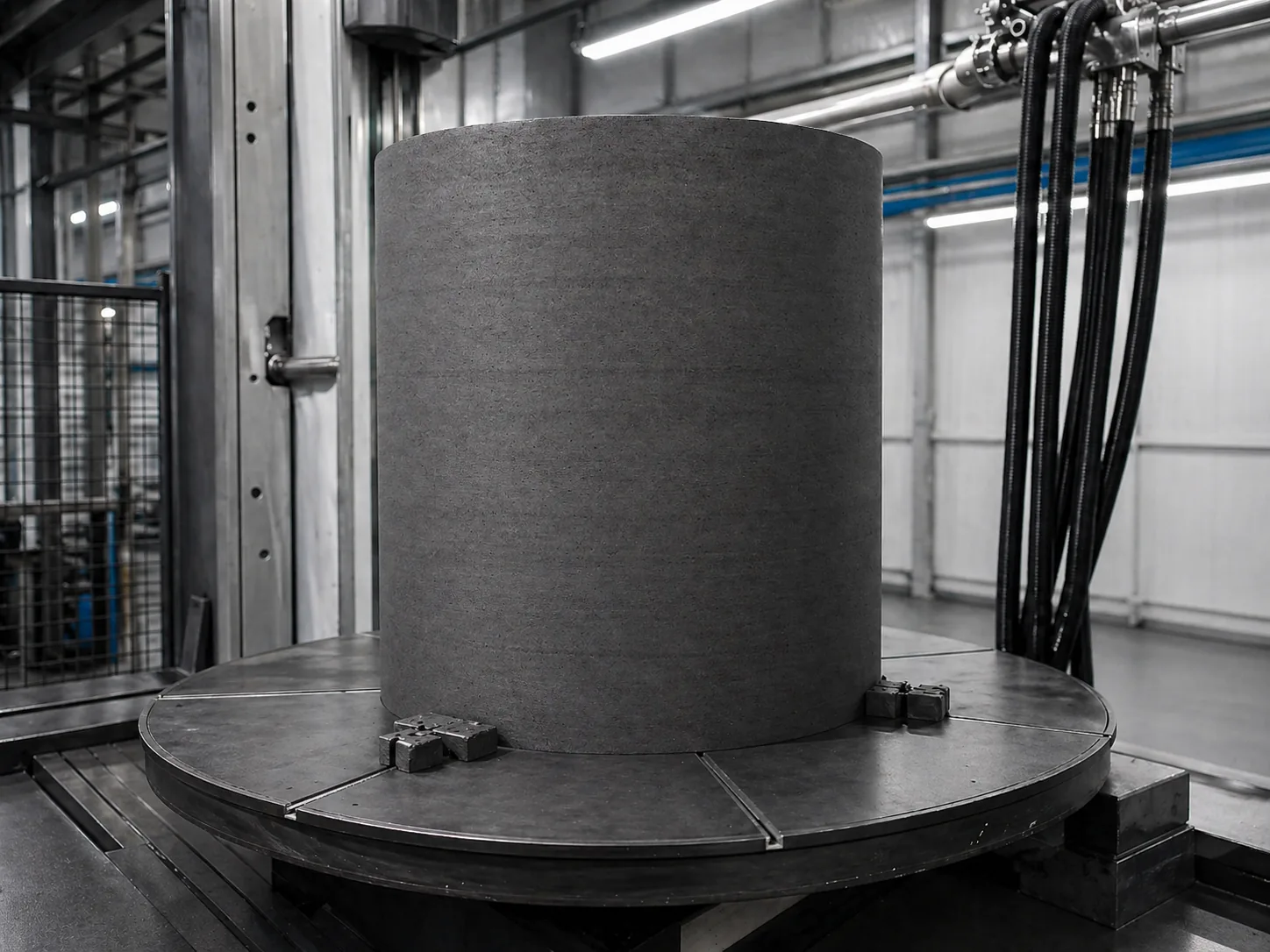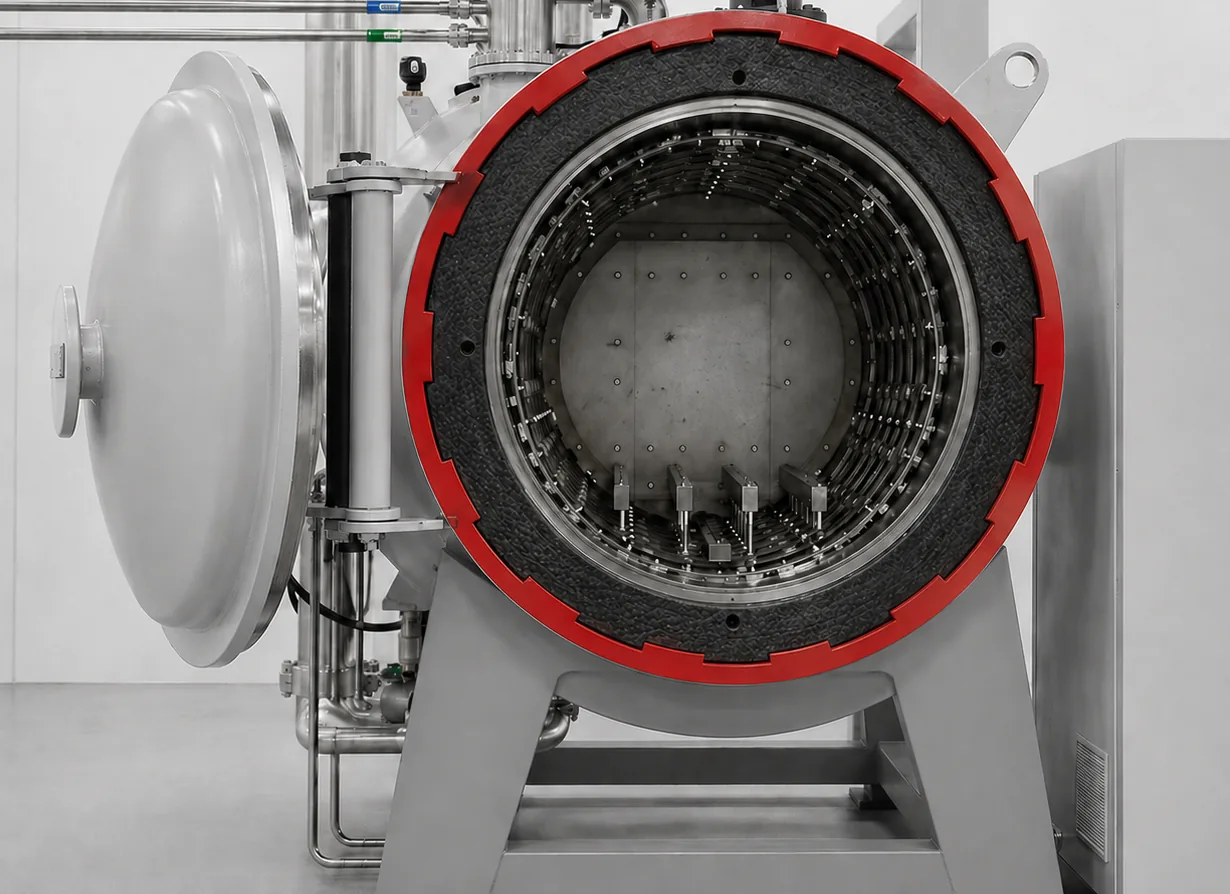
A graphitization furnace running up to 3,000°C, a vacuum brazing furnace at 1,100°C, or a sintering line operating around the clock, every hot-zone system has to be tailored to its furnace geometry, temperature profile, atmosphere, and process cadence. AYD focuses on the carbon-based insulation and hot-zone components that go inside the furnace.
For more than a decade, AYD has supplied industrial furnace manufacturers across graphitization, sintering, MIM, brazing, vacuum heat treatment, CVD, ceramic sintering, and powder reduction. For different chamber geometries, we provide custom insulation parts through precision machining, lamination, and modular assembly. Core requirements remain consistent: dimensional stability under thermal cycling, controlled ash and contamination, and repeatable thermal conductivity, density, and in-service performance from prototype validation through volume delivery.
The furnace landscape AYD insulation serves.
Across operating windows from 1,000°C to 3,000°C, and from vacuum to reactive atmospheres, AYD's high-purity carbon insulation covers the major categories of industrial high-temperature furnaces: vacuum furnaces, sintering furnaces (including MIM), brazing furnaces, heat treatment furnaces, CVD furnaces, and related systems.
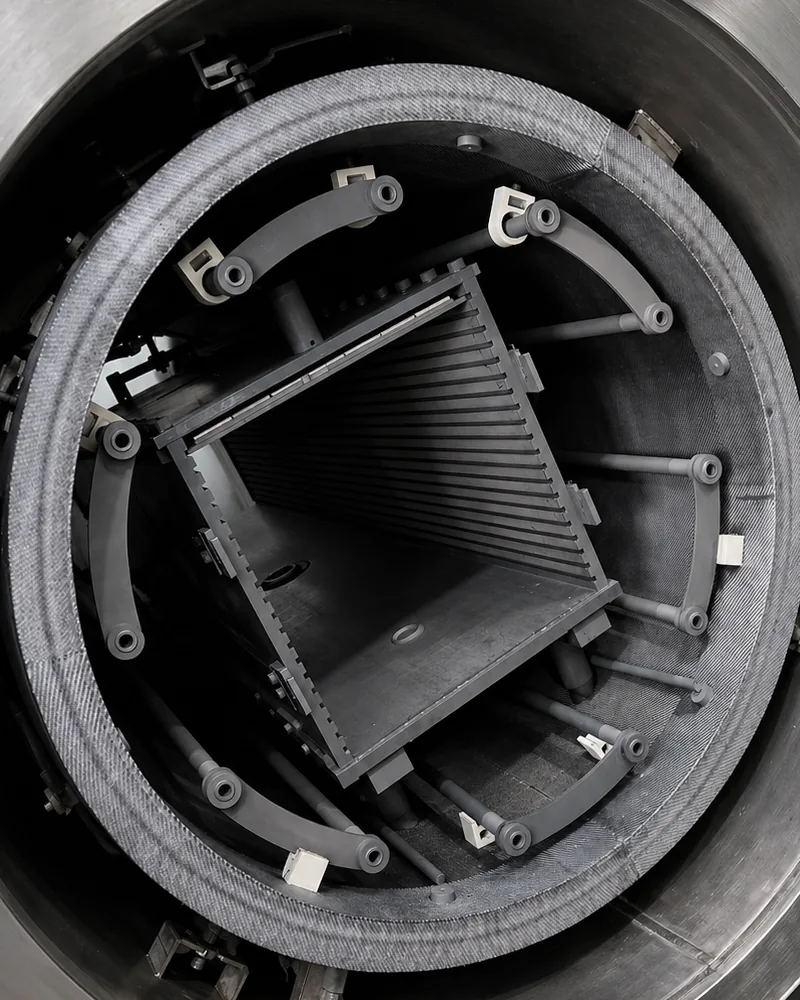
Full temperature spectrum from vacuum brazing through graphitization · modular assembly for complex geometries and large-format components · 4–8 week engineering and delivery aligned with OEM production schedules · applied across 20+ industrial furnace types from sintering to CVD.
Carbonization & Graphitization
Carbon precursors are heated to 2,500–3,000°C in vacuum or inert atmosphere, transforming disordered carbon into ordered graphite structure. End products include lithium-ion battery anodes, isostatic graphite, carbon fiber, and high-purity graphite electrodes.
Only a narrow set of materials remains stable at 3,000°C. Insulation must endure repeated cycles without deformation, keep ash low enough to reduce contamination risk, and maintain predictable thermal conductivity because energy cost becomes a major part of the operating model at this temperature.
Pitch-based rigid insulation forms the structural shell of the graphitization chamber, while soft felt fills internal thermal-gradient zones. Both must remain dimensionally stable above 2,500°C and support long furnace life with minimal degradation.
Sintering & Powder Metallurgy
Metal or ceramic powders, whether press-formed or injection-molded (MIM), are densified at 1,200–2,200°C in vacuum or inert atmosphere. End products span tungsten carbide tools, magnetic materials, sputtering targets, MIM components for medical and consumer electronics, and structural ceramics.
Sintering furnace OEMs face high-mix, high-volume production environments. Insulation must deliver consistent thermal uniformity batch after batch while supporting fast ramp-up and cooldown cycles. MIM in particular demands clean, low-volatile insulation surfaces to prevent contamination during the debinding stage.
Rigid insulation forms the structural envelope of the chamber; soft felt flexibly wraps heating elements to deliver thermal uniformity. Together they support hundreds of repeat cycles in both vacuum and inert atmospheres without dimensional drift.
Vacuum Heat Treatment & Brazing
Aerospace alloys, medical instruments, mold steels, and brazed assemblies are processed at 800–1,800°C under vacuum. Vacuum brazing joins dissimilar materials with copper, silver, or nickel filler; vacuum heat treatment delivers tempering, annealing, and aging without surface oxidation.
Workpiece cleanliness is paramount. Volatile species from the insulation can deposit on aerospace blades or medical implants and compromise the batch. Heating and cooling rates must also be tightly controlled to avoid distortion of precision parts.
High-purity rayon-based soft felt lines the inner chamber with low outgassing under vacuum; rigid insulation panels form the structural cold wall. Together they support fast cycling while helping maintain work-zone cleanliness.
Rigid Insulation/Felt
Pitch-based and rayon-based rigid insulation. Two process routes, molded-rigid and laminated-cured rigid felt, cover furnace applications from vacuum brazing to 3,000°C graphitization.
View ProductSoft Felt
Rayon-based long-fiber needle-punched felt. Flexible blankets and shaped components for thermal-gradient control under vacuum, inert, reducing, and reactive atmospheres.
View ProductCustom large-format hot zones.
Share your furnace dimensions, temperature profile, atmosphere, and service cycle. AYD can recommend the insulation material, module layout, surface treatment, and sampling plan.