RefineU is AYD's engineered petroleum pitch platform, specified for applications where carbon yield, impurity control, softening-point precision, and downstream process stability determine final material performance: lithium battery anode coating, pitch-based carbon fiber spinning, graphite electrode and C/C composite impregnation.
Produced from ethylene tar feedstock on a fully automated continuous line at 25,000 t/year, the platform provides five standard softening-point grades from 145°C to 285°C for solid-phase and liquid-phase coating routes. Pitch also feeds AYD's carbon fiber and rigid felt lines, giving each shipment clear chain-of-custody on chemical composition and impurity origin.
Engineered on a fully automated continuous line.
No batch breakpoints between stages. Ethylene tar and coumarone resin enter the line and are processed through feedstock handling, polymerization, flash separation, and component control, then qualified into five standard softening-point grades.
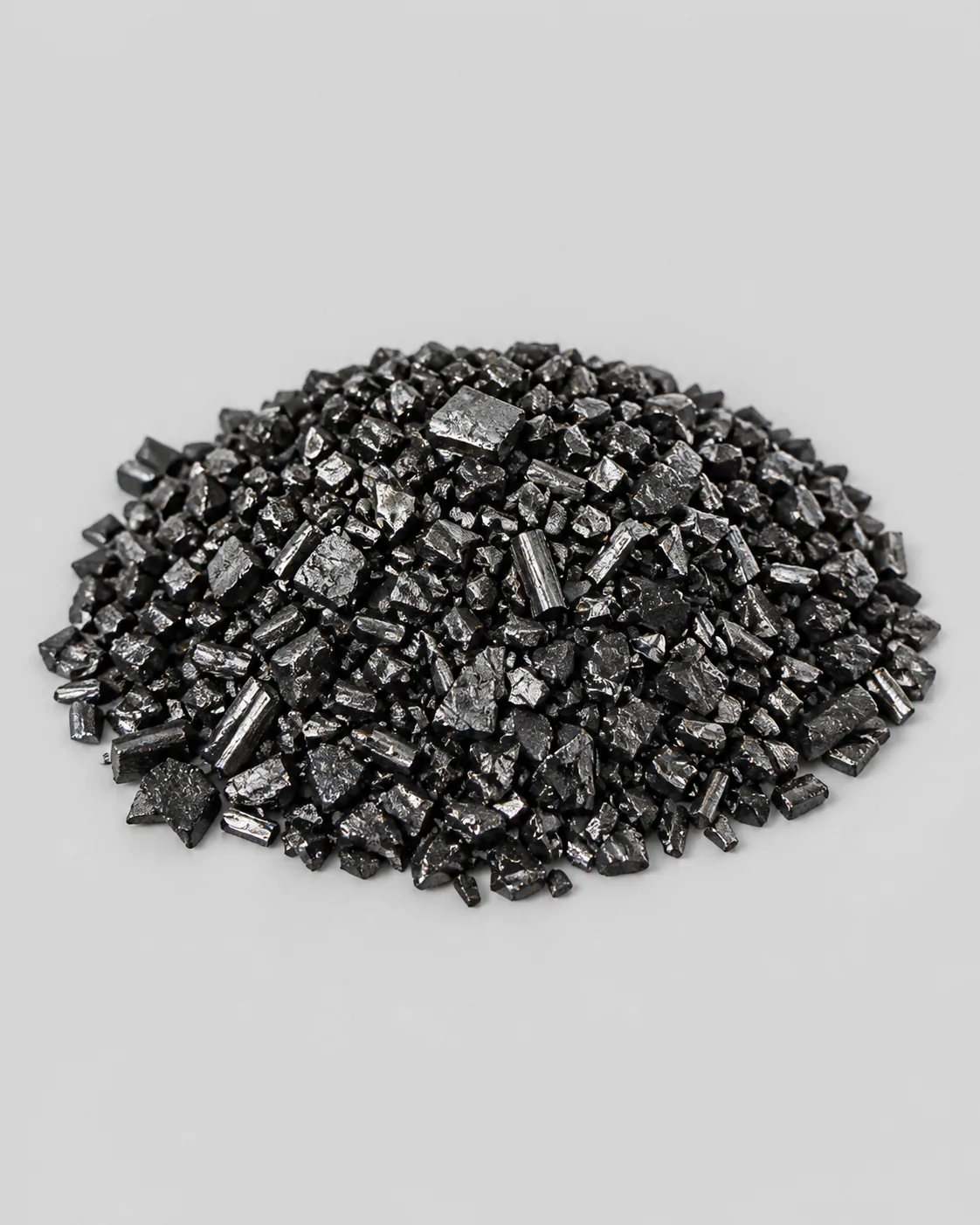
Block form · Standard packaging.
RefineU is shipped as block-form material. After cooling and pelletization, finished product passes through final demagnetization, with ash controlled to ≤0.1 wt%.
Specified packaging: woven bags, 1-tonne bulk bags, or customer-defined formats. Each batch is sampled and shipped with certificate of analysis covering softening point, carbon yield, QI, and ash.
Five standard softening-point grades.
From low SP for anode coating to high SP for impregnation and bonding, five standard grades cover key downstream application windows. All grades are controlled to QI ≤0.5% and ash ≤0.1%, with a fully automated continuous line engineered for batch-to-batch consistency.
| Grade | Softening Point°C · Mettler | Carbon Yieldwt% · GB/T 268 | Coking Valuewt% · GB/T 8727 | QIwt% · ASTM D2318 | Ashwt% · ASTM D2415 | Typical Application |
|---|---|---|---|---|---|---|
| PE-150 | 145–155 | ≥47 | ≥50 | ≤0.5 | ≤0.1 | General bonding · Low-temperature impregnation |
| PE-180 | 175–185 | ≥54 | ≥57 | ≤0.5 | ≤0.1 | General coating · Medium impregnation |
| PE-200 | 195–205 | ≥58 | ≥60 | ≤0.5 | ≤0.1 | Mainstream Li-ion anode coating |
| PE-250 | 245–255 | ≥67 | ≥69 | ≤0.5 | ≤0.1 | High-performance anode · Carbon fiber spinning |
| PE-280 | 275–285 | ≥73 | ≥75 | ≤0.5 | ≤0.1 | High-yield impregnation · Premium anode |
Softening point: Mettler automatic dropping method · Carbon yield: GB/T 268 · Coking value: GB/T 8727 · QI: ASTM D2318 · Ash: ASTM D2415. Each batch is sampled and shipped with certificate of analysis.
Lithium Battery Anode Coating
Bare graphite in contact with electrolyte drives solvent co-intercalation and irreversible capacity loss. Pitch coating engineers an amorphous hard carbon shell on the graphite surface, isolating the core from electrolyte and directing uniform, dense SEI formation. First-cycle efficiency and cycle life follow. Shell thickness uniformity, density, and carbon yield are governed by the softening point, QI, and ash of the chosen pitch.
Solid-phase coating runs on medium-to-high softening point grades (PE-200 / PE-250 / PE-280) and dominates volume production. Liquid-phase coating runs on low softening point grades (PE-150) and achieves nano-scale uniform deposition; specified for spheroidized natural graphite and silicon-based anodes.
Pitch-based Carbon Fiber Precursor
Pitch-based carbon fiber is produced by melt spinning: pitch is melted at 300–350°C and extruded through spinnerets into continuous fibers, then qualified through pre-oxidation, carbonization, and optional graphitization. Softening point must be specified within the optimal melt-spinning window; QI must be tightly controlled to prevent insoluble particles from clogging spinneret holes and triggering fiber breakage.
Spinning-grade pitch demands tight control across softening point, QI, carbon yield, and ash. SP too low: insufficient fiber strength during spinning. SP too high: spinning temperature approaches thermal cracking. QI must remain low to keep spinnerets clear. High carbon yield translates directly to carbonization economics. High ash compromises the conductivity and chemical stability of the resulting fiber.
RefineU PE-250 is the standard precursor qualified for AYD's in-house carbon fiber line. Vertical integration across pitch, carbon fiber, and rigid felt gives AYD consistent process data on chemical composition, aromatic ring distribution, and molecular weight distribution for each precursor batch. The same data supports process control for semiconductor-grade thermal insulation.
Impregnation & Bonding
Baked graphite electrode billets retain abundant porosity and require pitch vacuum impregnation, re-baking, and graphitization to achieve target density and conductivity. C/C composite densification follows the same logic: repeated pitch impregnation and carbonization cycles drive carbon content upward. Both routes are specified for high carbon yield and low QI: higher yield, fewer cycles to target density.
The governing indicators for impregnation pitch are carbon yield and coking value. Carbon yield ≥67% (PE-250) or ≥73% (PE-280) leaves more carbon per cycle, reducing densification cycle count. Low QI keeps pitch flowing into microporous structure without blocking pore openings. Low ash is equally critical for electrode resistivity and chemical stability.
RefineU PE-250 and PE-280 are the high-carbon-yield grades specified for graphite electrode impregnation and C/C composite densification. The continuous line supports tonne-scale volume orders alongside customized softening-point grades.
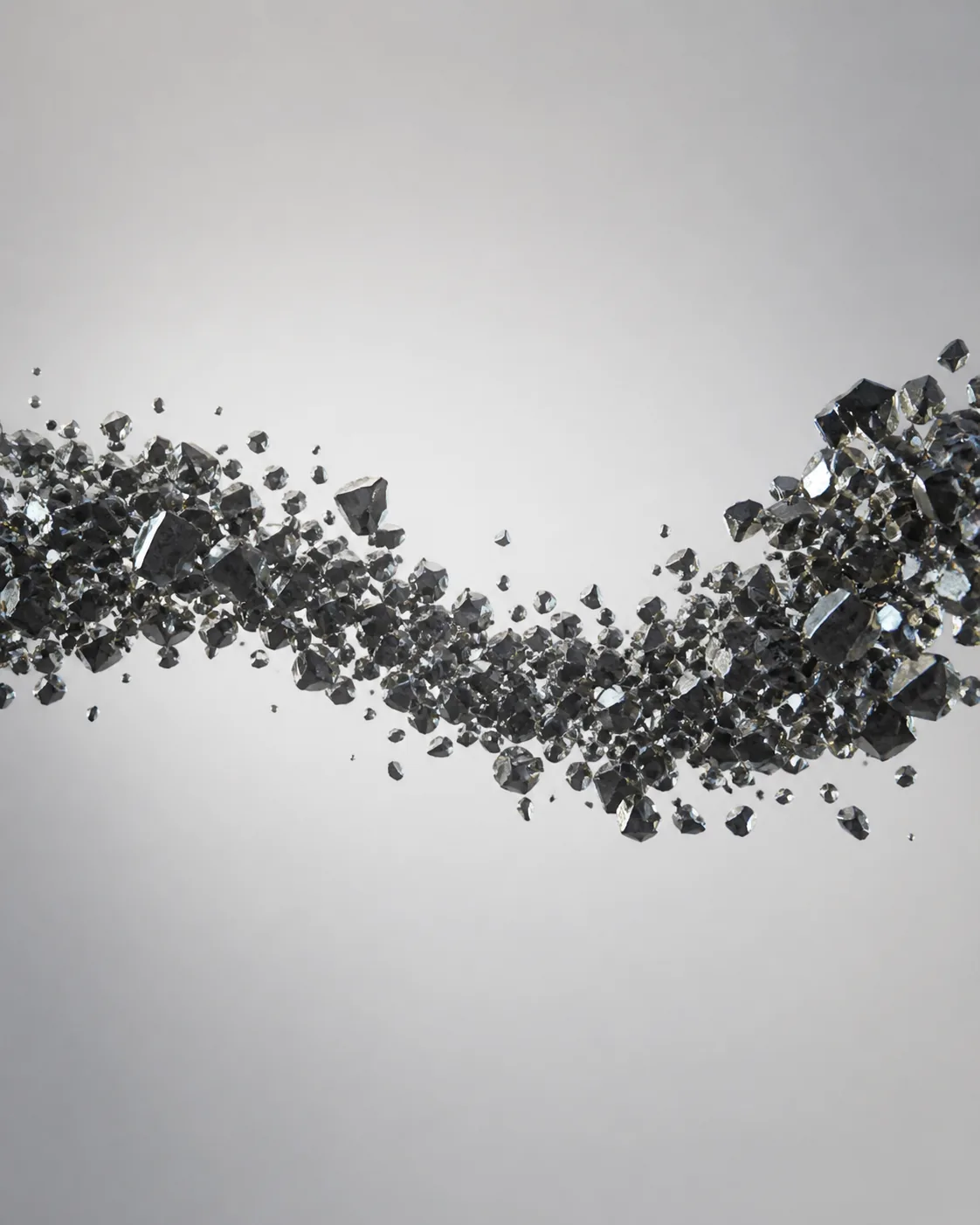
Pitch modification.
Engineered at the molecular level.
-
01
Nitrogen-doped Pitch
Nitrogen-bearing precursors introduced during the melt stage retain nitrogen atoms within the sp² network of the carbonized hard carbon. N-doped hard carbon delivers higher reversible capacity and enhanced sodium / potassium-ion storage; engineered for sodium and potassium battery anode research, available for joint development.
-
02
Custom Softening Point / Carbon Yield
Beyond the five standard grades, softening-point and carbon-yield combinations can be specified for customer spinning, coating, or impregnation processes. The R&D laboratory is equipped with bench-scale reactors, TGA, FT-IR, and GPC characterization.
-
03
Mesophase Pitch
Mesophase pitch is the precursor for high-modulus, high-thermal-conductivity carbon fiber. We have ongoing research on mesophase formation mechanisms, controlled thermal treatment, and liquid-crystal phase regulation, available for joint development with universities or customers at experimental scale.
-
04
Low-QI / Ultra-low-Ash Specialty Process
For semiconductor-grade, optical-fiber-grade, and aerospace-grade applications, a deep purification stage is engineered on top of the standard line, controlled to lower QI and ash than standard commercial specifications.
Downloads
Standard grade or custom specification?
Specify the downstream process, target softening point, carbon yield, ash limit, and order volume. AYD can confirm a standard grade or define a custom development path, from kg-scale R&D samples to tonne-scale orders.