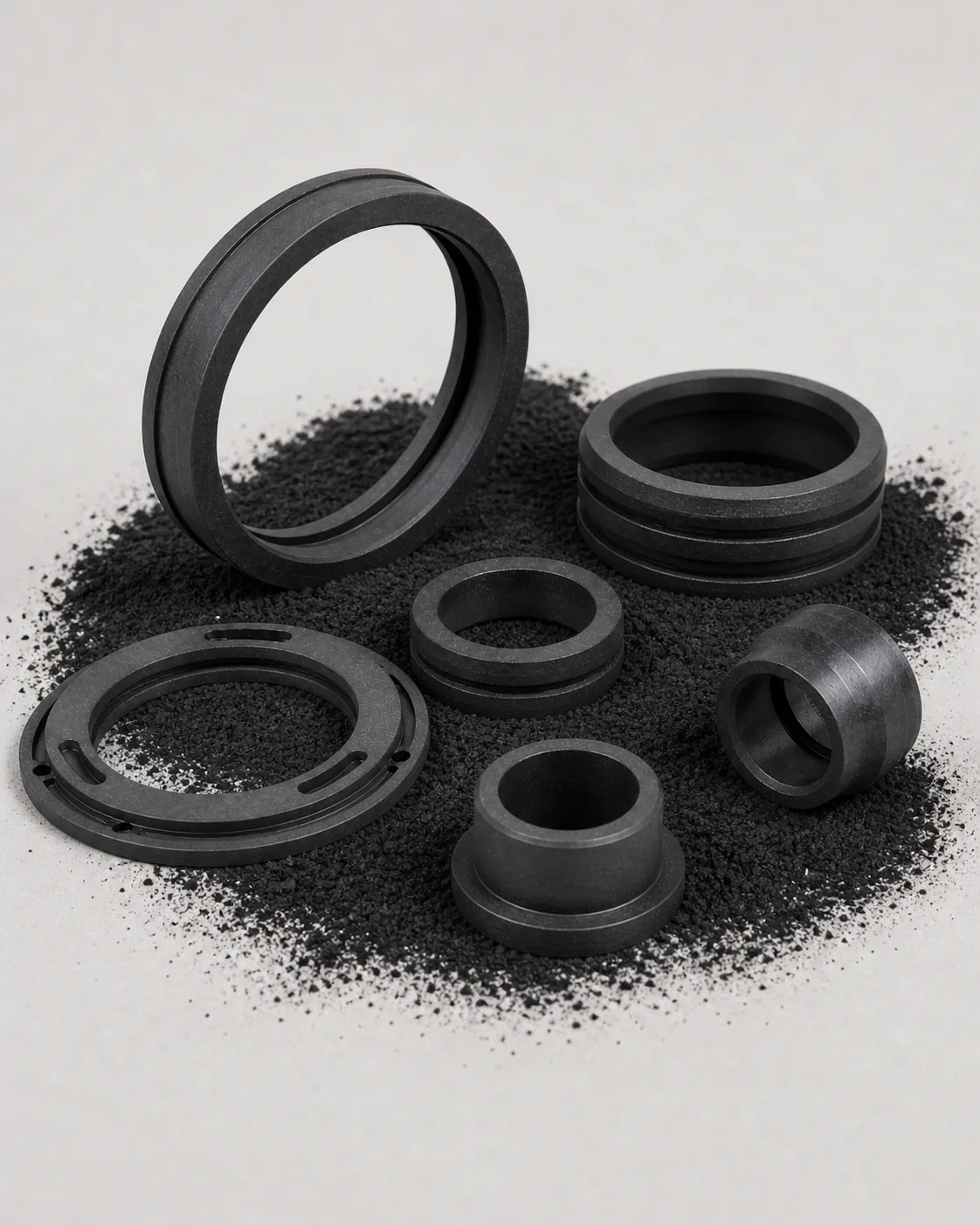
Carbon fiber is not a single material. It is a family of products defined by precursor and engineering target. PAN-based carbon fiber is engineered for high-performance structural reinforcement in aerospace, wind blades, pressure vessels, and sporting goods, where the value lies in tensile strength, modulus, and weight reduction. Pitch-based carbon fiber, by contrast, is engineered for functional composites: a stable carbon skeleton, controlled aspect ratio, and process compatibility that improve conductivity, wear resistance, thermal stability, and dimensional control of the host material.
FiberElite is built on AYD's in-house RefineU isotropic petroleum pitch. It serves sealing, friction, ESD, thermal-management, and high-temperature insulation systems as a pitch-based functional filler. It is not positioned to replace high-performance PAN-based structural carbon fiber; it is designed to give downstream material systems a controllable, dispersible, and scalable carbon-fiber phase.
From ethylene tar onward, integrated and traceable.
AYD controls pitch precursor production in-house. From ethylene tar to pitch, and from pitch to carbon fiber, impurity sources, chemical composition, and process parameters are managed internally. Customers receive a traceable material route, not only a finished filler.
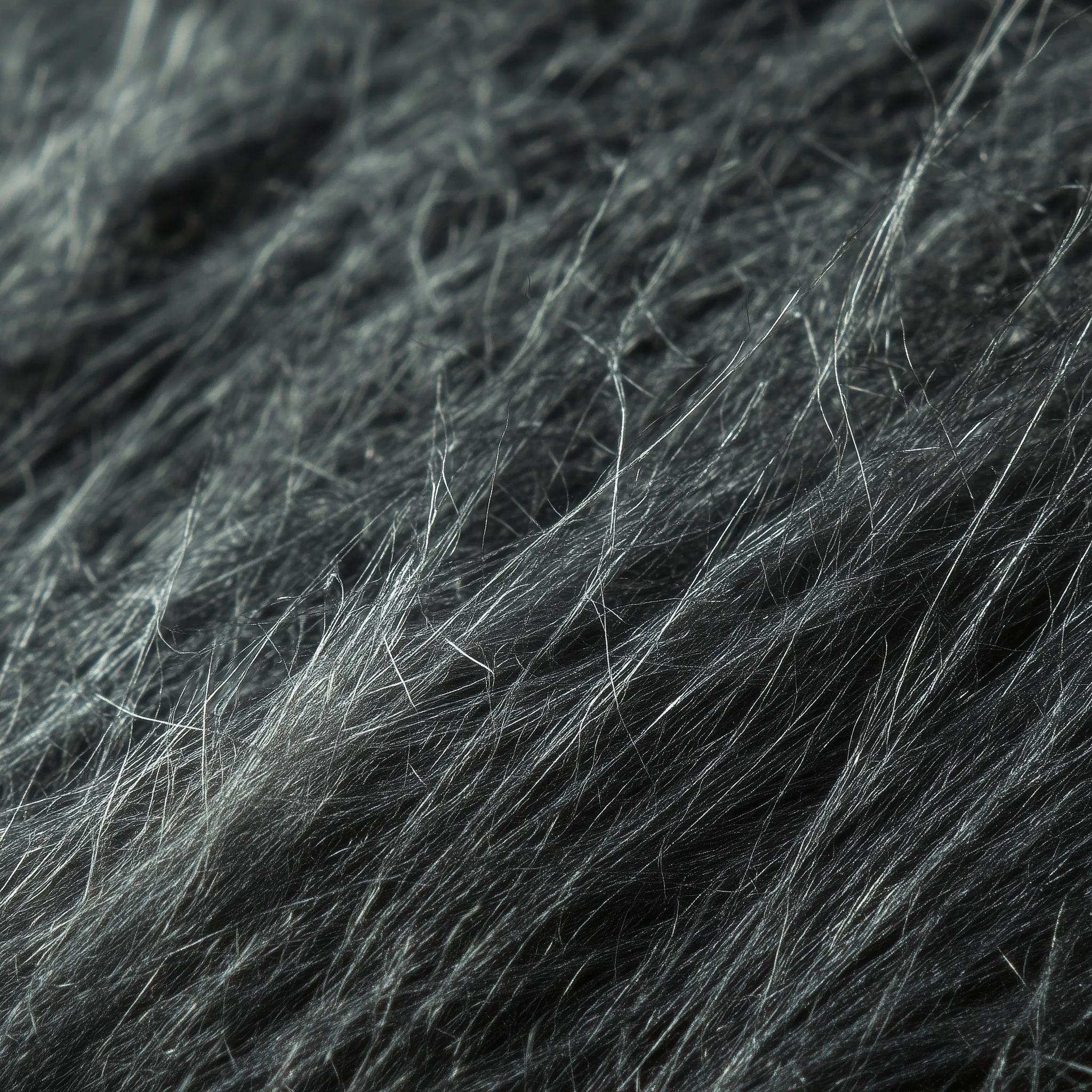
All FiberElite products share the same isotropic pitch precursor route and a vertically integrated quality system. Chopped fiber (mm scale) and milled powder (μm scale) cover sealing, friction, ESD, and insulation-precursor applications. Length, particle size, and purity can be customized to match customer process requirements.
Reinforced sealing components
Pure PTFE delivers excellent chemical inertness and low friction, but it is vulnerable to cold flow under sustained compression. Gasket thickness can shrink over time, reducing sealing reliability. This is a recurring pain point in high-temperature valves, chemical-plant flanges, and semiconductor gas lines. Formulators need a filler that reduces cold flow without giving up the low-friction, chemically inert character of PTFE.
Isotropic pitch-based milled powder embeds in the PTFE matrix as a microscopic compression-resistant skeleton, suppressing long-term creep and stabilizing gasket thickness. The 13.5 μm diameter offers more reliable compression support than the 7 μm of PAN-based fiber. The fiber's chemical inertness and high-temperature stability (stable up to 2000°C in inert atmosphere) match PTFE without introducing new compatibility issues, qualifying it as the standard reinforcement for high-performance soft PTFE gaskets.
Rubber seals (O-rings, valve-stem seals, dynamic seals) under high load and high cycle counts require a more rigid filler. Mid-particle pitch-based powder delivers stronger support stiffness while preserving rubber elasticity. For asbestos-free flange gaskets, chopped fiber serves as the temperature-resistant backbone replacing legacy asbestos, and is commonly specified for formulations that need to clear regulatory requirements in Europe and the Americas.
Engineering "gentle conductivity"
Semiconductor wafers, electronic components, flammable chemicals, and explosive-material storage environments are sensitive to static accumulation. A single discharge can ruin a wafer or trigger an ignition event. The solution is not metal-like conductivity, which introduces new short-circuit and electrical-safety risks, but the ESD-safe window of 10⁶ – 10⁹ Ω surface resistance: fast enough to drain static, slow enough to avoid forming a continuous conductive path.
Isotropic pitch-based carbon fiber sits naturally at 1–6 mΩ·cm volume resistivity. Dispersed in PPO / PPE / PEI engineering plastics or in epoxy / polyurethane coating matrices at typical loadings of 5–15% by weight, it can bring the composite's surface resistance into the ESD-safe window. Compared to chopped straight fiber and carbon black, pitch-based powder can achieve conductivity at lower loading and has limited effect on color formulation, supporting light and tinted applications.
Black plastic IC trays used to transport wafers in semiconductor fabs are a representative application: high stiffness, ESD protection, and low metallic-ion release. The formulation pairs PPO / PPE base resin with pitch-based carbon-fiber powder. For diffusion-furnace plastic components and wafer carriers with tighter cleanliness requirements, the deep-purification grade (ash < 20 ppm) is the recommended upgrade.
Cleanrooms, electronics plants, and flammable-storage facilities need continuous static dissipation through their flooring. Pitch-based carbon powder dispersed in epoxy or polyurethane floor coatings delivers stable surface resistance (10⁷ – 10⁹ Ω) along with abrasion and chemical resistance. Compared to carbon-black ESD flooring, pitch-based filler has minimal color impact, supporting tinted ESD floors without compromising conductivity.
From brake pads to self-lubricating bearings
Automotive brake-pad surface temperatures can spike above 600°C under heavy braking. Formulators need a fiber phase that meets three conditions: thermal stability (no decomposition or melting), chemical inertness (no reaction with phenolic resin or metallic powders), and moderate thermal conductivity (heat dissipation without fade). Isotropic pitch-based carbon fiber meets all three. Mid-length chopped fiber is the mainstream choice for organic (NAO) and semi-metallic brake-pad formulations, with typical loadings at 2–8% by weight.
Clutch facings need a stable friction coefficient and smooth engagement profile across repeated cycles. Fiber length sets the steepness of the engagement curve: mid-length chopped fiber suits passenger-vehicle service, while longer fiber is engineered for commercial-vehicle and heavy-duty conditions. The chemical inertness and thermal stability of pitch-based fiber prevent burn-off and embrittlement under sustained high-frequency engagement, qualifying it as a compliant functional substitute for asbestos.
Pitch-based carbon fiber is intrinsically self-lubricating. Compounded into thermoset resins (phenolic, epoxy) or engineering plastics, pitch-based powder can improve wear resistance and friction-coefficient stability of sliding pairs. Typical applications include pump-body liners, valve-stem seals, and bearing bushings for high-temperature service, cleanroom environments, and food-grade conditions where oil lubrication is not viable.
FiberElite chopped fiber is a regulation-compliant fiber phase for asbestos-free brake pads, clutch facings, and gasket formulations. It supports export and domestic production without asbestos-regulation barriers.
From carbon fiber to hot-zone furnace components
The microstructure of isotropic pitch-based carbon fiber is amorphous and disordered. This is unfavorable for mechanical strength (tensile strength is lower than graphitized fiber) but highly effective at blocking heat: phonons scatter and decay through the disordered structure, producing very low thermal conductivity (< 0.3 W/m·K). In industrial high-temperature insulation, this helps maintain low thermal conductivity above 1000°C while keeping the temperature gradient between furnace interior and exterior stable.
AYD processes chopped fiber through needle-punching into soft felt, then through resin impregnation, curing, and carbonization with optional graphitization into rigid felt and molded insulation. The route from ethylene tar to final rigid-felt component is completed in-house. Impurity sources are controlled end to end for semiconductor crystal-growth hot zones, monocrystalline-silicon furnaces, SiC sintering furnaces, and other applications with tight cleanliness requirements.
FiberElite Pitch-Based Carbon Fiber
Isotropic pitch-based functional carbon fiber. Two physical forms, chopped fiber (C series, mm scale) and milled powder (P series, μm scale), are available in two purity grades: standard (carbonized) and graphitized (CG / PG). Covers sealing, ESD, friction, and insulation-precursor applications. Deep-purification version reaches semiconductor-grade ash < 20 ppm.
View product specificationsRefineU Petroleum Pitch Series
The upstream feedstock for FiberElite carbon fiber. Distilled and cracked from ethylene tar through 5 standard softening-point grades, on a fully automated continuous line, with annual capacity of 25,000 metric tons. In functional-composite applications, the precursor's chemical composition, aromatic-ring distribution, and impurity sources directly determine the consistency of the downstream carbon fiber.
View product specificationsMatch the fiber to the formulation.
Share the application, target matrix, performance requirement, and procurement scale. AYD can recommend fiber length, particle size, purity grade, and customization scope, from kg-level R&D samples to metric-ton production orders.