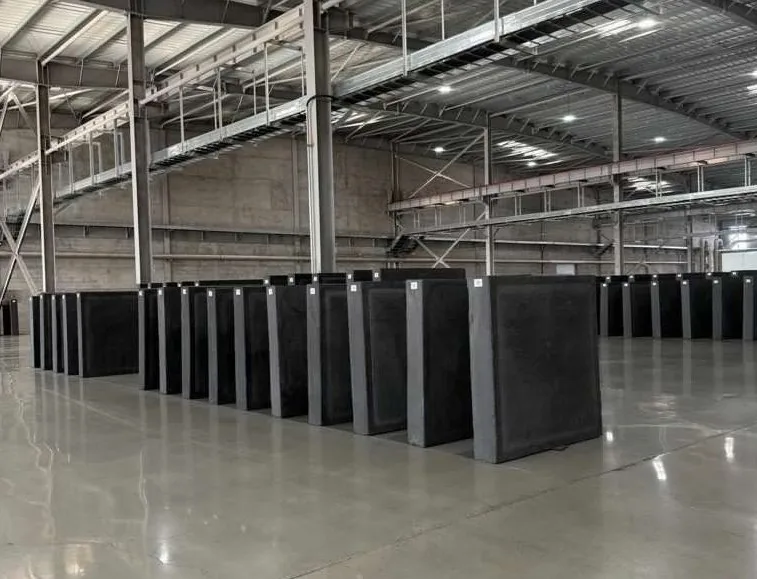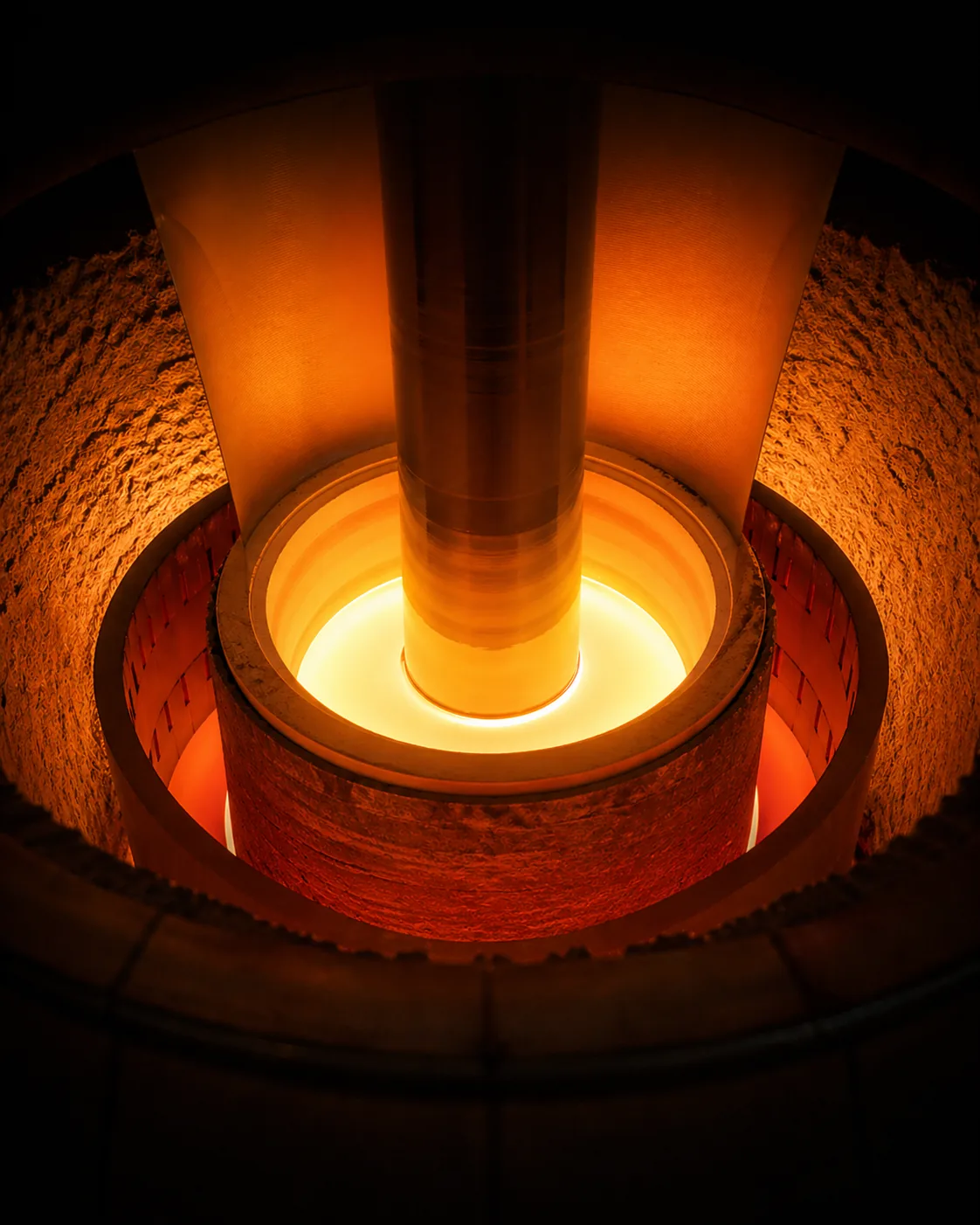
Photovoltaic and sapphire crystal growth places demanding requirements on carbon insulation size, stability, and purity. Multi-crystalline silicon ingots cast in directional solidification furnaces measure over a meter on each side. Single-crystal silicon ingots from CZ pullers run for days at 1,420°C. Sapphire ingots for LED and display substrates grow inside furnaces filled with corrosive carbon-laden atmospheres at 2,050°C. In these processes, hot-zone stability directly affects crystal quality, and insulation determines how controllable that hot zone remains.
AYD has spent more than a decade building oversized insulation for these crystal-growth platforms. Project geometries have extended beyond Ø1.8 m across poly-Si, mono-Si, and sapphire systems. The constants remain the same: dimensional stability under sustained high temperature, ash control to keep the melt clean, and thermal uniformity across multi-day runs.
AYD's role across photovoltaic and sapphire crystal growth.
From silicon feedstock and Al2O3 raw material to finished ingots, AYD's high-purity carbon insulation supports three classes of crystal growth furnaces: multi-crystalline directional solidification, single-crystal Czochralski pulling, and sapphire crystal growth. Each platform places demanding requirements on hot-zone dimensions, run time, or chemistry.
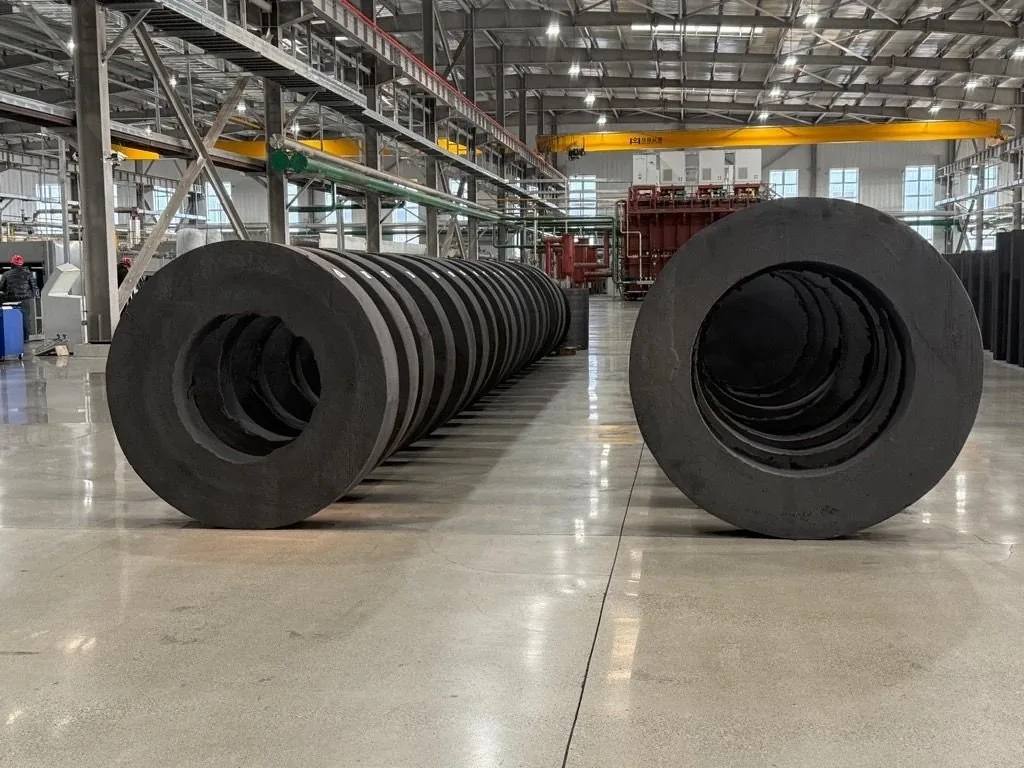
Single-piece insulation up to Ø1,800 mm · ash content qualified for photovoltaic and sapphire grades · density and thermal conductivity controlled to ±5% across production runs · over a decade of custom hot-zone delivery for crystal growth platforms.
Multi-crystalline Casting
Polysilicon feedstock is melted and solidified inside large square crucibles inside directional solidification furnaces. As the melt cools from the bottom up, columnar grains grow vertically, producing multi-crystalline silicon ingots that are then sliced into wafers for solar cells. Ingot footprints have grown from G6 (~1,000 mm) to G12 (~1,200 mm) and beyond.
Hot-zone components are the largest in any silicon process; bottom plates, side walls, and top covers often exceed a meter across. They must hold their shape over hundreds of cycles without cracking, while keeping ash low enough to avoid contaminating the melt.
Large-format rigid insulation forms the structural envelope of the furnace, such as bottom, side, and top plates that remain dimensionally stable across thermal cycles. Soft felt blankets fill the spaces between rigid components and the chamber wall, ensuring uniform thermal gradient during the long solidification run.
Single-crystal Czochralski
Polysilicon is melted in a graphite crucible at 1,420°C, and a single-crystal ingot is "pulled" from the melt, known as the Czochralski (CZ) process. M10 and M12 ingots reach diameters of 210–230 mm and run continuously for over 120 hours per pull. CZ-pulled mono-silicon now dominates high-efficiency PV cell production.
Long pulls mean any temperature drift compounds. The hot-zone insulation must hold within tight thermal tolerances across days of continuous operation, while the ingot grows ever larger and the chamber sees more thermal cycling than ever before.
High-density rigid insulation forms the structural sleeve of the puller. Soft felt provides flexible thermal control around the heater and crucible. Both components must remain stable in low-pressure inert atmosphere across hundreds of pulls.
Sapphire Crystal Growth
Aluminum oxide (Al2O3) is melted and recrystallized into single-crystal sapphire ingots inside furnaces operating at 2,050°C. Common platforms include Kyropoulos (KY), Heat Exchanger Method (HEM), and Czochralski. The resulting boules are sliced into wafers for LED epitaxy and advanced display substrates.
Sapphire growth creates a chemically demanding crystal-growth environment, where hot Al2O3 vapor can react with or attack many materials. Many sapphire furnaces use tungsten and molybdenum components for primary heating, but carbon insulation remains the structural and thermal envelope around them.
Rigid insulation forms the outer thermal shell of the furnace, protecting the W/Mo components and maintaining temperature uniformity across the boule. Soft felt fills critical thermal gradient zones. Carbon insulation must hold its shape and conductivity stably above 2,000°C in a vacuum environment.
Rigid Insulation/Felt
Rayon-based and pitch-based rigid insulation, engineered for large-format hot zones up to Ø1,800 mm. Available in molded-rigid and laminated-cured rigid felt processes.
View ProductSoft Felt
Rayon-based long-fiber needle-punched felt, flexible blanket and shaped components for thermal gradient control in poly-Si, mono-Si, and sapphire furnaces.
View ProductDecades of custom oversized hot-zone experience.
Share your dimensions, temperature profile, atmosphere, and purity target. AYD can recommend the insulation route, forming method, and sampling plan for your hot zone.